

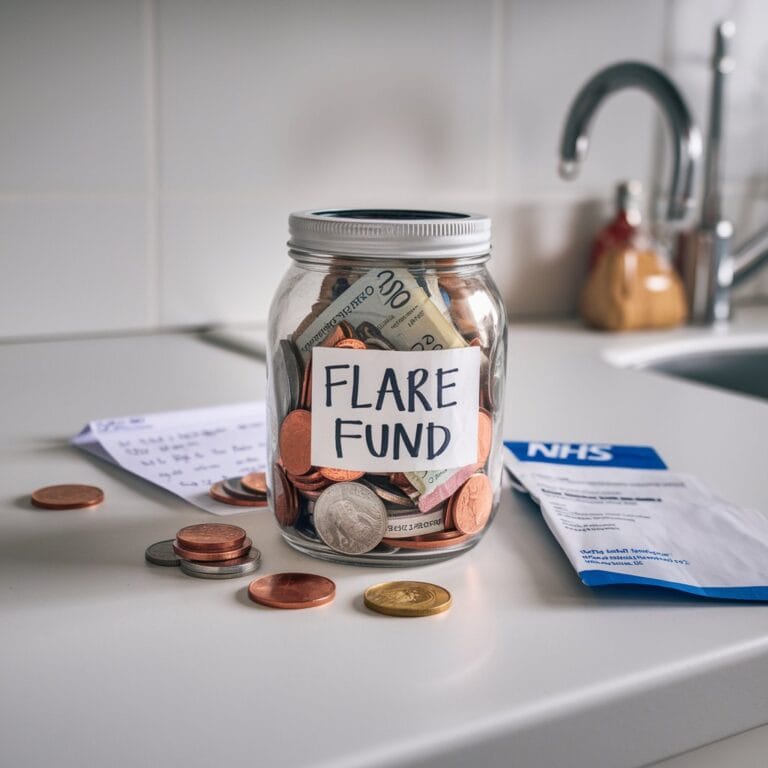
The hidden costs of Crohn’s disease can feel like a stealth tax, quiet yet significant. You finally find a treatment rhythm, then your kitchen turns into a supplement shelf, your wardrobe flexes with body changes, and your social calendar collects cancellations like a foggy day at Heathrow.
Beyond medical bills and clinic time, the cost of living with Crohn’s disease shows up in smaller, repeat purchases and plan changes that drain time and money. The hidden costs of Crohn’s disease include missed work, meal tweaks, emergency taxis, and a steady mental load that makes every decision feel heavier. This guide maps the Crohn’s disease financial impact and offers practical ways to soften it.
Managing Crohn’s as a full time job
Managing Crohn’s often feels like running a demanding startup where your body sets the meeting times. The schedule is as reliable as a printer that jams only on deadlines. The work is not just symptoms, it is planning, packing, predicting, and recovering, again and again.
Decision fatigue creeps in fast. Food or rest. Work or recovery. Travel or stay close to home. The mental load stacks up, and energy management becomes a daily skill you never applied for. Naming that load helps, it is real, and it has costs.
Hidden costs of Crohn’s disease you might miss
Outgoings rarely arrive one at a time. A prescription here, a supplement there, and a last minute taxi during a flare. The NHS Prescription Prepayment Certificate can cut Crohn’s disease medication costs, because one payment covers your NHS prescriptions for the period. Think of it as buying in bulk for your regular scripts.
The real Crohn’s disease financial impact goes wider than clinic fees and healthcare costs:
- Specialised diets raise grocery spend and prep time, these are Crohn’s diet expenses
- Clothing needs shift with weight and bloating, elastic waistlines and duplicates for work
- Supplements and over the counter remedies stack up as monthly expenses
- Missed work dents income and can reduce paid leave later in the year
- Bathroom access when travelling, paid loos, strategic taxi rides, and route changes
- Extra heating and comfort items during flares for rest at home
Many of these are hidden expenses of Crohn’s because they feel too small to track. Together they make up Crohn’s disease expenses that quietly build over time. Naming them is the first step in managing Crohn’s disease costs with less stress.
The social cost of cancelling plans
Living with Crohn’s adds an uncertainty tax to every invitation. Birthday meals become probability puzzles. Work events become calculations about toilets, timing, and fatigue. The Crohn’s social costs grow when repeated cancellations lead people to stop asking.
Think of your social life like a bank account. When you are well, you make deposits, a message, a short coffee, a rain check offered early. When flares hit, you draw down. That goodwill matters.
Cancelling is not only guilt. Late tickets, travel, and gifts can be non refundable, and plans often come with admin you still need to handle. It is fair to factor those flare up costs into your planning.
To protect connection, share simple ground rules with friends. Offer flexible options like a short walk, a sofa chat, or video catch ups. Explain your limits in one or two lines and suggest an alternative date. That small clarity saves energy on both sides.

Smart savings and energy hacks
Financial management
- Audit your monthly expenses. List prescriptions, supplements, special foods, taxis, and paid loos. If you pay for more than two scripts most months, the NHS Prescription Prepayment Certificate often reduces Crohn’s disease medication costs. Set a reminder two weeks before renewal.
- Try Crohn’s budget planning. Open a small health pot or separate account. Total three months of Crohn’s disease expenses, then set that average as your standing monthly transfer.
- Build a Crohn’s emergency fund. Price one week of flare needs, takeaway meals, cab fares, heat pads, soft clothes, and extra loo roll. Save that as your emergency buffer and top it up after each flare.

Energy conservation
- Track your energy for two weeks. Spot your best two hour window and book important tasks there. Protect it like an appointment.
- Create minimum versions of routine. A five minute hygiene plan, three ingredient meals, a one message reply on bad days. Small wins keep momentum.
- Set up activity stations. Bedside care kit, a grab and go food prep area, a bathroom pouch. Fewer steps save spoons.
Social connection protection
- Offer flexible plans up front. Home meetups, short time slots, or video calls reduce Crohn’s social costs when energy dips.
- Be specific about help. Ask a friend to collect a script, pick up groceries, or check in by text. Clear tasks make it easy to say yes.
- Find peer support through Crohn’s & Colitis UK. Practical tips plus people who understand missed work and shifting priorities make a real difference.
Taking control of Crohn’s hidden costs
Understanding your patterns turns guesswork into a simple system. You know your body best, and small, steady tweaks beat grand plans. Pick one habit this week, track the effect, then adjust. That is managing Crohn’s disease costs in real life.
Progress is rarely tidy. But a short list, a small buffer, and a few saved steps can ease the load you feel each day. If any new symptom or expense worries you, speak to your care team.
Medical disclaimer Remember, this article is for information only and is not medical advice. Always talk to your doctor about your situation and the best treatment for you. Do not start or stop medicines without medical advice, and do not change your diet without speaking to your doctor or a healthcare professional.