
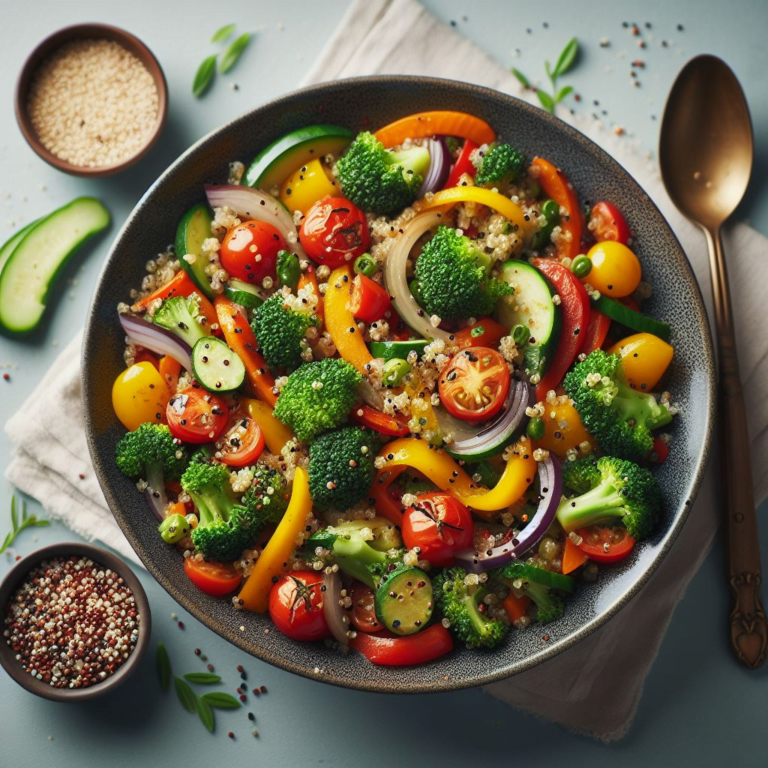
Struggling to find Crohn’s disease diet recipes you can cook on a Tuesday without stress? If meals have started to feel like a gamble, this vegetable and quinoa stir-fry keeps the odds in your favour. Built around gentle ingredients and cooked for digestive comfort, it is a light, flavourful dish that behaves itself. Quick to make, easy to eat, and reassuringly routine.
Crohn’s disease diet recipes made simple
Quinoa brings steady energy and a soft bite, and the veg are cooked until tender for a kinder texture. Many readers tell us this sits happily among their gut-friendly recipes, especially when they keep the seasoning simple and the heat low. If you follow a low-FODMAP approach, you can make this one of your low-FODMAP quinoa recipes by using the green tops of spring onions and keeping portions sensible.
This recipe also fits into the kind of easy dinner recipes you can repeat without getting bored. Think of it as one of those easy Crohn’s recipes that earn a place in the weekday rotation. If you are curious about quinoa nutrition or new to how to cook quinoa, a good rinse and gentle simmer keep it fluffy, not soggy.
Why this feels gentler
- Soft-cooked veg can be easier to handle than crunchy stir-fries.
- Olive oil keeps it in the low-fat vegetarian recipes camp.
- Tamari brings savoury depth with less fuss than heavy sauces.
- Small tweaks make it one of those Crohn’s friendly recipes that fits your routine.
Vegetable & Quinoa Stir Fry
Equipment
- Frying pan or wok
- Saucepan with lid
- Kitchen knife
- Chopping board
- Stirring spoon
Ingredients
- 100 g quinoa rinsed
- 200 ml water
- 2 tbsp olive oil
- 1 medium courgette diced
- 1 medium aubergine diced
- 2 spring onions green tops only, sliced
- 1 red bell pepper deseeded and diced
- Salt and pepper to taste
- 1 tbsp tamari or low-sodium soy sauce
- 1 tbsp fresh chives chopped
Instructions
- In a saucepan, bring water to a boil. Add quinoa, reduce heat, cover, and simmer for about 15 minutes or until quinoa is cooked and water is absorbed.
- In a large frying pan or wok, heat olive oil over medium heat.
- Add courgette, aubergine, bell pepper, and spring onions. Stir-fry for about 5-6 minutes until veggies are tender.
- Stir in cooked quinoa and mix well.
- Drizzle with tamari or soy sauce and toss to coat evenly.
- Serve hot, garnished with fresh chives.
Notes
Store leftovers in an airtight container and refrigerate.
Make it yours
Ingredient swaps and texture tweaks
- Go softer. Cook the vegetables a little longer if you prefer a gentler texture.
- Swap the veg. If aubergine is not your friend, try peeled carrots or finely sliced green beans.
- Tamari sauce tips. Start with less, taste, then add more slowly.
- Add protein. Fold through grilled tofu, eggs, or slow-cooked chicken if that suits you.
- Mind the fibre. Peel veg if skins are tricky for you, and chop small.
Portion and leftovers
Some readers find smaller plates work better, then a second helping if all is calm. Leftovers reheat well with a splash of water to loosen. This fits neatly among recipes for Crohn’s disease that make simple lunches the next day.
Where this recipe fits
Think of it as part of your Crohn’s disease recipes toolkit. It can double as one of your quinoa meals for Crohn’s disease, or sit alongside vegetarian recipes for Crohn’s disease when you want something steady. If you are searching for Crohn’s diet dinner ideas or diet recipes for Crohn’s, this covers the bases without feeling fussy.
It also plays nicely with gut-friendly recipes for days when you want calm, and it belongs with inflammation-friendly meals that lean on gentle ingredients. Among healthy quinoa recipes, this vegetable and quinoa stir-fry earns repeat status.
Medical information
Remember, this blog post is intended for informational purposes only and should not be construed as medical advice. Always consult with your doctor to discuss your individual situation and determine the best course of treatment for you. Do not start or stop medications without speaking to a doctor. Do not change your diet without speaking to your doctor or a healthcare professional.